
Thryv Therapeutics
SHARED STORIES & BLOG

Dave Hutton and his Long Cutie, Isla
Dave Hutton is a school teacher by profession, and a Long QT Syndrome caregiver by devotion. Upon his daughter Isla’s diagnosis with Long QT Syndrome Type 3 in 2016, Dave left teaching to be the full-time caregiver to his little girl.
It is with a broken heart that we share the news of Isla Hutton’s passing.
On October 8, 2022, Isla passed away surrounded by her family and loved ones. She bravely faced so many challenges with her joyful smile and insatiable curiosity. At six years old, she now has her wings and continues to shine with a bright glow that touches us all. Isla is at the heart of our Thryv family. It is her curiosity, bravery and smile that inspire us, and push us forward so we can help other children who simply deserve more. #ForIsla
The following is the original Shared Story by Dave, Isla’s dad, written in July 2020. To read an article about Dave and little Isla in the Manchester Evening News, January 15, 2023, click here.

Dave Hutton is a school teacher by profession, and a Long QT Syndrome caregiver by devotion. Upon his daughter Isla’s diagnosis with Long QT Syndrome Type 3 in 2016, Dave left teaching to be the full-time caregiver to his little girl.
Dave chronicles the journey he and his daughter are undertaking with The Long Cutie blog and The Long Cutie Instagram page.
Recently Dave took the time to visit with Thryv Therapeutics to share more of his daughter’s story.
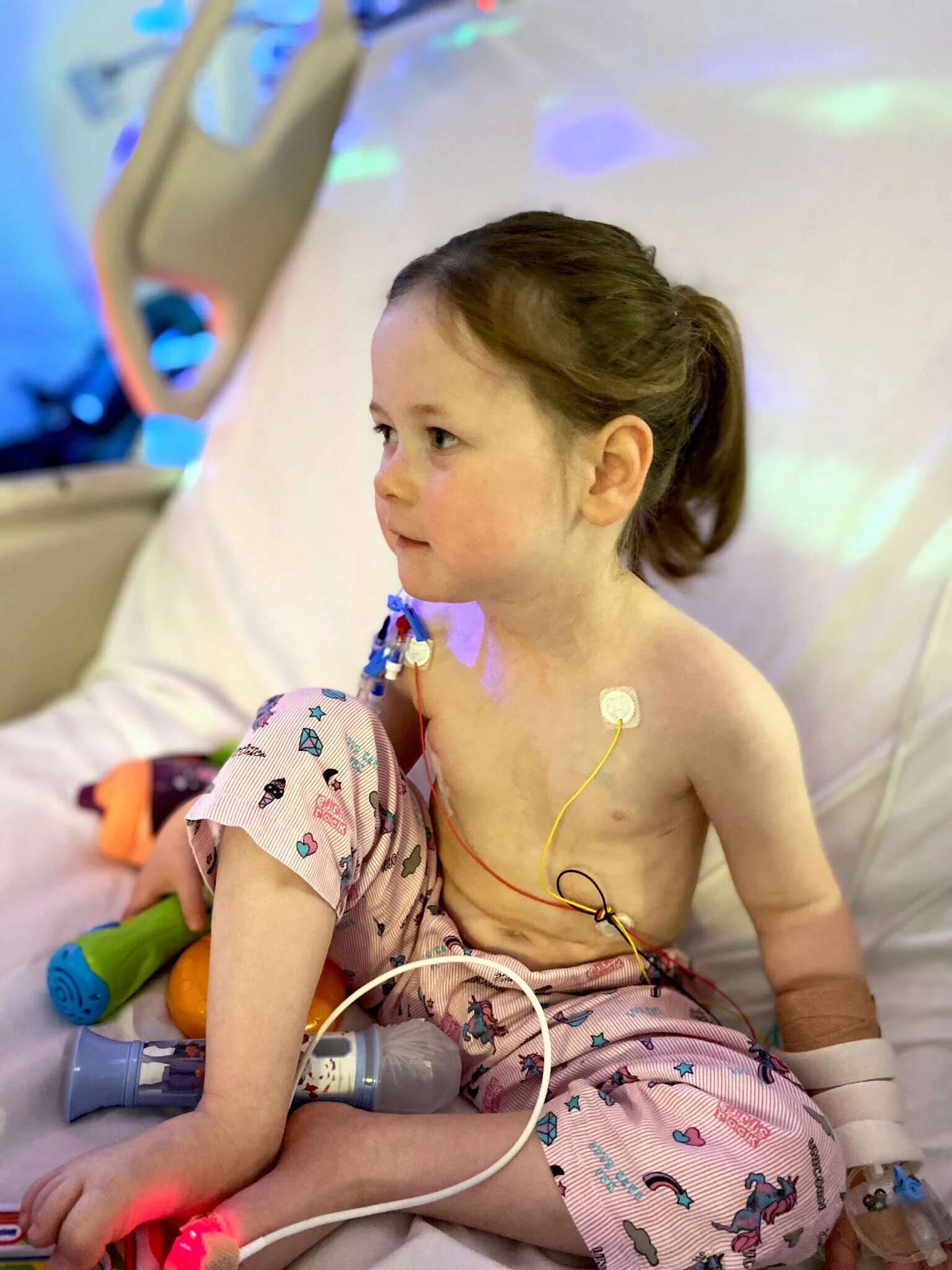
How was Isla diagnosed with Long QT Syndrome, and what was your initial reaction?
Dave Hutton: When Isla was born, she was on a huge cocktail of medications because all we knew was that she was in complete heart block and in near constant arrhythmia, which we now know was Torsades (Torsades de pointe). It was a regional cardiologist who saw Isla’s rhythm and suspected she had Long QT Syndrome, and put a stop to all the medications. As he didn’t know what type she was, she was fitted with a pediatric pacemaker so she could safely start beta blockers. It wasn’t until her genetics came back that she was officially diagnosed with Long QT Type 3.
How many surgeries has Isla endured, and how do the two of you, individually, work through those processes?
It has been a very rocky road and a steep learning curve. I think the cardiac community as a whole has learnt a lot about Long QT Syndrome in the last four years, so when Isla was born a lot of mistakes were made. For example, Isla spent her first three months in Intensive Care, on a number of drugs which are on the no-go list for Long QT (as per CredibleMeds). Some were no doubt necessary given her delicate condition, however, drugs like Chloral were given to keep her calm, so looking back it is of little wonder she has had so many episodes of Torsades.
The journey to get her on the correct medication, and the right dose of medication, for her, was also a challenge. I was very lucky to find a lady in America via a Google search on Long QT, whose daughter was diagnosed with Long QT Syndrome. I managed to find her on Facebook and she put me in contact with their doctor in Cincinnati. Dr. Knilans advised Isla’s doctors and got us on the right path, medication wise. However, Isla still had problems as even on the ‘maximum’ dose of Mexiletine she wasn’t achieving a therapeutic serum level to keep her safe. It was ‘in range,’ but not high enough to control her rhythm. I still have my emails to Dr. Ackerman (Dr. Michael J. Ackerman, MD, PhD, and a member of Thryv Therapeutics’ Scientific Advisory Board) as a desperate parent, ‘Subject: LQTS3 7 week old baby in UK.’ I have no doubt at all that without his reply and advice Isla would not be here. It took a brave cardiologist and dose of Mexiletine way above the recommended guidelines to achieve control and actually see Isla’s ECG for the first time.
It was January 25, 2018 that things really changed for Isla when she had a cardiac arrest at home. Although we had a defibrillator, Isla’s heart stopped before we had chance to deliver a shock. I performed CPR and thank God she responded and came back to us. It was at this point that her team decided to transfer her care to a team specialised in Inherited Cardio-Vascular Diseases, and she was fitted with her ICD. Since it has been fitted, she has had 16 life saving shocks, although six of those were during a bout of flu. In February 2020, she had Left Cardiac Sympathetic Denervation (LCSD), and then the sympathectomy was completed in May when they removed the Sympathetic nerves on her right side.
Isla is subject to repeated seizures; describe how they present themselves, as well as the short- and medium-term impacts on you both.
Isla has had countless seizures since eight months old, the time her NJ tube (nasojejunal tube) was removed and Mexiletine was being absorbed by her stomach for the first time. She would range from having subtle eye-twitching seizures to full blown tonic-clonic seizures. She could have up to 20 seizures a day. We knew that Mexiletine was causing the seizures, but it was a case where we were between a rock and a hard place; seizures or cardiac arrests. Since upgrading her pacemaker to a more sophisticated ICD and pacing system, we have been able to safely reduce her Mexiletine to non-toxic levels. The seizures were really life-limiting for us as a family. They are not only scary to deal with, but we felt we couldn’t really leave the house in case she had one.
She still does have seizures due to her Torsades, which present differently to her neurological seizures. Her seizures are now tonic seizures where her body and limbs become suddenly stiff. They are only short seizures, but probably more scary since we know it means she is having an arrhythmia.

What’s a typical day for Isla, and how do you manage her condition along the way?
Isla is beginning to live a ‘normal’ life. She does have to have different medications four times a day, which she takes so well, including in her sleep at midnight. Now she has her ICD, we don’t worry as much as we know that it will intervene for us if she goes into cardiac arrest. That doesn’t mean we don’t take our eyes off her for a second because we know just how delicate her condition is. She started nursery this year and loves it; it is great for her to have such a busy, interactive environment to thrive in. She is due to start school in September (Kindergarten) which is exciting too!
Isla has many autisic traits but lives a happy, fun-filled life. She has global developmental delay which is partially due to her prolonged hospitalisation and her high levels of medication. Her consultant is adamant that her behaviours are the result of high levels of sodium channel blockers and the neurological impact of Mexiletine, and if she wasn’t on Mexiletine she would be a different child. Unfortunately, at the moment Mexiletine is the only medication that works for her and keeps her alive. She still has a great quality of life and we are grateful for Mexiletine, but if Thryv Therapeutics can create a more effective, targeted compound, it would be appreciated! ;)
On your blog, you’ve been open about the psychological impacts of Isla’s health on you personally - How do you cope, where do you find solace, and what advice would you provide other parents?
Being a parent is an amazing blessing, however, being a parent in general causes around 1,000 grey hairs! Every parent worries about their child. Parents of children with complex conditions worry more than most and deal with situations and pressures that no parent should. I have talked to psychologists as part of the care team around Isla in hospital, which really helped at the time and helped me process a lot of my feelings and fears. I think the most important thing anyone can do for their mental health is find someone to talk to. It doesn’t have to be a psychologist, just someone who will listen and not judge you as you verbalise the things that you’re feeling and going through. I actually find writing my blog is my best therapy as it really helps me find solace and organise my thoughts. This might not work for everyone and I’m sure there isn’t a one-fits-all solution to coping, but the important thing is to not go through it on your own.
What are Isla’s most favorite things to do? What brings her the most joy?

Isla loves life. She can find joy in anything and everything. She really enjoys sensory experiences and I am slowly turning my house into what seems like a playground! She has two indoor swings and one outdoor one, a whizzy dizzy she can spin around on, a trampoline and I’ve just bought an indoor climbing frame! She also loves swimming … but I don’t have the room or money to build an indoor swimming pool!
Isla loves spinning things (we have lots of spinning tops) and any toy made by V-Tech *other toy makers are available* which makes lots of noise. When she goes to nursery, I have to press the buttons on her toys as the house seems too quiet!
As you continue to spread the story of Isla and your collective journeys, what messages do you most want to convey to your readers?
The one thing that is important to share is to be kind to yourself and talk to the right people. There are a lot of people out there who may try to give you advice, criticise what you say or do; but only you know your life and situation, so it is important to trust your gut and do what you think is right. It is great to talk to others and through doing this blog I have met and talked to so many great people who have reached out and shared their experiences. It is so good to know that you’re not going through things alone and others can empathise, even if they can’t fully understand what you’re going through.
To read an article about Dave and little Isla in the Manchester Evening News, January 15, 2023, click here.
At Thryv Therapeutics our mission is to relentlessly pursue precision therapies to treat Long QT Syndrome, allowing people to live their best lives. Without limits.
Discover how we are doing this.

Dr. Maroua Khalifa, Ph.D
Dr. Maroua Khalifa Ph.D is a research scientist reviewing chemistry and biology reports, designing new molecules and their synthetic routes to target specific biological pathways, and developing and executing multi-step synthesis of new small molecules.
We are now Thryv.
LQT Therapeutics Inc. has changed its name to Thryv Therapeutics Inc.
At LQT Therapeutics, our most valued resources are the remarkable team members who work toward the development of more effective therapies for patients suffering from Long QT Syndrome, life-threatening arrhythmias and treatment-resistant cancers. In this post, we’d like to introduce you to Dr. Maroua Khalifa.
Dr. Khalifa was born and raised in Tunisia, growing up by the sea. In 2012, upon being named the recipient of a prestigious local scholarship, she moved to Canada to pursue her Ph.D. at the University of Montreal, where she graduated in 2017.
She returned home and worked as a research and development project manager at Novalix Tunisia before once again relocating to Canada to consult at Gladius Pharmaceuticals. Dr. Khalifa joined LQT Therapeutics in November of 2019.
A fluent speaker of three languages (Arabic, French and English), Dr. Khalifa recently took time from her laboratory research to share more about herself.

Describe your role at LQT Therapeutics: What are your day-to-day tasks and accountabilities?
Dr. Khalifa: My position at LQT Therapeutics is that of a research scientist, in both chemistry and medicinal chemistry. In that role, I review chemistry and biology reports, design new molecules and their synthetic routes to target specific biological pathways, and develop and execute multi-step synthesis of new small molecules.
Tell us a bit about your upbringing: What and who were the biggest influences in your life?
I am Tunisian, born and raised in Tunisia in a family of five, where I grew up by the sea. I am where I am at today thanks to my parents who always encouraged me to give my best in everything I do. My parents are the biggest influences in my life: They are handworkers and achievers of dreams. They gave me the strength, hope and love I needed to achieve my own goals.
When I look back, I realize I had to overcome several challenges, including leaving my family behind and starting a whole new life half a world away. It was a big cultural difference for me, and it was magnified by working under a professor who demanded nothing less than perfection. It would have been easy to have given up and tried something new - I have friends and colleagues who have done just that. But, my parents taught me that if I wanted something, I could achieve it through hard work and perseverance. For me, it’s about focusing and never abandoning the dream.
Of your life experiences, what has taught you the most, and how do you reflect on that learning as you go forward?
When I was 16 years old, my father was diagnosed with epilepsy, and since that day, our lives have changed. A lifelong treatment was needed in order to control his seizures. Learning how to live with this condition and finding the right treatment was so challenging but because of our faith and perseverance, we are now leading a relatively normal life again.
The entire experience showed me how important it is to patients, and their families, to receive the right treatments and, hopefully, remedies; to be able to live their lives with no fear and without restrictions.
It also affected my career path. Up to that time, I had envisioned myself as a pharmacist. After my father’s diagnosis and the journey we travelled on together to discover and adopt an effective treatment, I decided to pursue a different career option, where I hopefully could make a larger impact.

What sparked your interest in science, and when did you decide upon science as a career path?
Since I was a kid, I have always been curious and very observant, and I always wanted to discover how things worked. While other kids were playing outside, I was enjoying myself with experimenting or reading science books and magazines. So, when I grew up and I had to choose a path, it was a very clear choice: Science!
How did you first learn of Long QT Syndrome, and how has further learning about LQTS impacted your professional work?
The first time I heard about LQT Syndrome, it was late 2019 when we were establishing the company in Laval. LQTS is not a common disease; many understand heart failure, but not so many understand LQTS as one of its root causes. So, I started immersing myself in understanding more about this rare condition, and the more I learned, the more eager I got to help those patients to lead a normal life. I continue to find it very inspiring and motivating to read about their stories.
What is the most rewarding aspect of your work at LQT Therapeutics?
I find the most rewarding aspect is that one day, by developing the right small therapeutic molecule, we can help a person pursue their dreams freely without limits or fear.
Over the years and with personal experience, I have come to know the struggle of patients with rare diseases not well understood by doctors and researchers. In addition to my father being diagnosed with epilepsy, my best friend was also diagnosed with epilepsy, and I’ve gone through those journeys with them together. There is immense reward, and pride, in helping them live a more normal life. My drive is that we can accomplish that for those with LQTS everywhere.
Outside of work, what are the activities you’re most passionate about?
Away from the lab, I love reading books, particularly novels, and especially anything written by Paulo Coelho. I also paint, and my favorite mediums are on silk and on glass, depending on my inspiration at the time. I also enjoy exercising and I work out regularly.

In addition to those hobbies, I also enjoy volunteering, and my interests there revolve around children, those with autism spectrum disorder and those with Down syndrome.
At LQT Therapeutics our mission is to relentlessly pursue precision therapies to treat Long QT Syndrome, allowing people to live their best lives. Without limits.
Meet our Scientific Advisory Board

The Powerful Potential of Stem Cells in Pre-Clinical Research
LQT Therapeutics researchers use iPSC-derived cardiomyocytes from patients of Long QT Syndrome. These cells are then programmed to acquire properties of cardiomyocytes of LQTS patients.
We are now Thryv.
LQT Therapeutics Inc. has changed its name to Thryv Therapeutics Inc.
Over 15 years ago, stem cells burst into the general news, and while over time they may have slid from the consciousness of the general public, stem cells remain vitally important in the laboratory for researchers around the world, including those working in pre-clinical drug research, like the team at LQT Therapeutics.
Strictly speaking, a stem cell is an undifferentiated cell of a multicellular organism which is capable of giving rise to indefinitely more undifferentiated cells (i.e., more stem cells), and from which other kinds of cells arise by differentiation. Speaking more simply, stem cells are a type of cell that can develop into many different types of cells, or can simply regenerate themselves by dividing.

The human body has a variety of different types of cells - skin cells, blood cells, muscle cells (including heart cells), and the like. As these cells mature, they lose the power to divide or replicate. Therefore, stem cells, which have the capability to differentiate into any cell type, have garnered a lot of interest from the global scientific community.
In some laboratories, scientists are exploring stem cells’ regenerative properties and how they replicate, with an eye toward possible treatments of conditions including diabetes and heart disease. Another way researchers use stem cells is in the development and testing of new chemical compounds and drugs to treat various health conditions. In this type of work, researchers work primarily with a type of stem cell called induced pluripotent stem cells (iPSCs), which are generated from adult cells.
With appropriate nutrients and inducers, iPSCs can be programmed to differentiate into any cell type of the body, including cardiomyocytes that make up heart muscle/cardiac muscle. These cells then serve as a great modelling platform for therapeutic drug screening or assay development. Another notable application of iPSCs in cardiac research is in optical mapping technology, where high-speed cameras and fluorescence microscopy are deployed to examine the etiology and therapy of cardiac arrhythmias in patient-like environments.
At LQT Therapeutics, our researchers use iPSC-derived cardiomyocytes from patients of Long QT Syndrome (LQTS), and these cells are then programmed to acquire properties of cardiomyocytes of LQTS patients. Using these cells, the LQT Therapeutics team tries to understand the effect of their compounds on LQTS. It also allows them to determine not only what works and what doesn’t, but also what works without any undesired toxicity to other cells.
While stem cells might be the (mostly) unsung heroes of the human body, they certainly are appreciated and valued on the bench in the lab. They are indispensable assets in the race for cures for so many problematic health challenges.
Lab work is a rigorous cycle of formulation, testing and modification of hypotheses through systemic observation, measurement, experimentation and analysis. LQT Therapeutics’ dedicated research team continues their stem cell work, relentlessly pursuing more precision therapies to treat Long QT Syndrome, allowing patients to live their best lives.


Alexander Thomas & Family
Alexander Thomas is a 17 year-old dance prodigy born in South Florida. Alexander also has Long QT Syndrome, a condition shared by his mother, Palmire, and his brother, Adrien. This is their journey, shared with the LQTS community.
We are now Thryv.
LQT Therapeutics Inc. has changed its name to Thryv Therapeutics Inc.

Alexander Thomas is a 17 year-old dance prodigy born in South Florida to parents of Haitian descent. At age three, noticing Alexander’s natural affinity for dance, his mother, Palmire, enrolled him in the That’s Dancing studio in Lake Worth, Florida, where he has been dancing for the past 14 years. At age nine, Alexander joined the Fusion Force Dance company, and his career has continued to blossom, including performing during the 2020 Super Bowl LIV Halftime Show and being profiled in Nike’s 2020 Black History Month video, Common Thread: Alex & Ingrid.
Alexander Thomas also has Long QT Syndrome, a condition shared in his family by both his mother, Palmire, and his brother, Adrien.
The three of them recently took the time to share their experiences and further connect with the LQTS community.
When and how were the three of you diagnosed with Long QT Syndrome? What led to the initial diagnosis?
Palmire: “In 2013 I went in for my annual physical. My doctor decided to do an EKG just to have a baseline, given that my mother had an extensive cardiac history. Upon looking at my EKG, he immediately said something was wrong and sent me to see a cardiologist. After a series of tests, my cardiologist said my EKG showed I had Long QT Syndrome. In turn, he referred me to see an electrophysiologist, where I underwent hours of diagnostic testing and genetic testing.
“Three months later I was called and told it was confirmed I have Long QT Syndrome. I was devastated.
“Shortly after, I was told my children needed to be tested. My three children, Gabriela, Alexander and Adrien - at the time aged 4, 10 and 14 - were tested. Two months later I was called and told the boys were positive, but my daughter was not.
“I literally felt like our life was over.
“I was told repeatedly that Long QT Syndrome was a rare disorder, and after we were sent to see genetic counselors, the boys and I were placed on a beta blocker. Additionally, I was scheduled for a defibrillator, which was implanted internally in 2013. Adrien and Alexander obtained portable defibrillators to carry everywhere they go.
“I had to hold meetings with their schools to ensure they had enough defibrillators, and that the teachers and staff were sent for training to know how to use the device as well as learn CPR. Alex, of course, was a dancer, and Adrien played soccer on a travel team. Our doctors wanted the boys to give up both. Adrien was older and read a lot about Long QT and decided himself to stop playing soccer. Alex refused to give up dancing. He stated this was his dream. I met with his dance studio and explained Alex’s situation, and they immediately ordered a portable defibrillator and sent their teachers for CPR training as well.”
How did being diagnosed impact you individually? How did you feel, and what were the emotions you experienced? How has it changed over the past seven years since your initial diagnosis?
Palmire: “When I was first diagnosed, I was 34 years old, and I had no symptoms. When I received my diagnosis, I literally felt my whole life was over. I had never heard of this disorder. Actually, no one in my family or circle of friends had. I was afraid to die, and I cried every night in fear of falling asleep. My husband was very positive. He supported me through all my sleepless nights.
“When I was told I needed to get a defibrillator placed, I was beyond upset, and I refused at first. My cardiologist literally insisted. He and my electrophysiologist both insisted. It was for my safety and to protect me and save my life.
“Two months later the boys were diagnosed. I felt responsible as they inherited this from me. My family was asked to get tested - my parents, siblings and first cousins - and they all refused. I put a baby monitor in the boy’s rooms and would check on them constantly in the middle of the night. I was paranoid, not only afraid of me dying, but my boys as well. I felt like I stopped living.
“The boys’ cardiologist was amazing. He provided me with his cell phone number and told me I could call anytime. Seven years later, I'm still super nervous. Adrien is now away at college. We must communicate verbally and we Facetime every single day. We never skip any doctor appointments. Alex, with every one of his dance shows and competitions, my heart races, and I literally feel like I can't breathe - I get so emotional praying nothing happens to him on that stage.
“Seven years later, I am a lot more positive and optimistic. Seeing how far the boys and I have come has made me realize I no longer live so much in fear.”
Alex: “My emotions were down. I didn’t know what to think at such a young age that something like this could happen to me. I didn’t know what to do. I was scared for my life, that I wouldn’t be able to dance again, the one thing that took me away from doing bad things. Over the past seven years, it has gotten slowly worse, but every day my knowledge of this condition has increased immensely. Through it all, I have worked on bettering myself as a person and as an individual.”
Adrien: “The diagnosis impacted me greatly. My mental health was not in the best state, and I did end up seeking therapy related to it. I can proudly say that it has given me a new outlook on life that I didn’t have before. I am in a much better place now. At first, I experienced a wide range of emotions like confusion, fear and anger. I didn’t understand what was going on because I was so young. As I got older, things became a lot easier to understand. I have also been in college for a few years now, taking some medical classes, and they have helped me to understand more about the structure and function of the heart. If anything, it has increased my interest in the medical field. I feel like now I am in a much better position to help others who may be going through similar issues.”
How did receiving a diagnosis of Long QT Syndrome change your lives?
Palmire: “Together, the boys and I can no longer take any over-the-counter medications for common colds, and we can’t take just any antibiotics when we have an infection. Also, like with schools and Alex’s dance academy, we must constantly educate people of our condition everywhere we go.
“The boys each wear a medical alert bracelet, and we take our beta blocker medication every day. Also, we must stay hydrated - it’s not an option.
“Of course, we cannot miss any of our doctor appointments, and I have to get my defibrillator interrogated every three months. And, when we go on vacation, we always take out travel insurance.”
Alexander: “My life has changed indefinitely because I have to take extra precautions in everything I do. My life has never been the same, even after seven years have passed. I monitor my heart rate with every activity I do, and constantly stay hydrated. It’s definitely a huge change, but I learned to grow into this new normalcy.”
Adrien: “The diagnosis has changed my life completely. It hasn’t been - and never will be - the same. I have multiple doctors that I have to go to frequently, and I have to be careful which medications I take. I have to monitor my heart rate when playing sports, and I have medication I am required to take every morning to help with the condition.”
Since your diagnoses in 2013, how have you changed the management of your condition over the past seven years?
Alexander: “Every day I strive to drink half of my body weight in fluid ounces to ensure I'm always hydrated. I take a beta blocker every morning which controls my heart rate. I also have two portable defibrillators I take with me everywhere I go. I see both an electrophysiologist and a cardiologist once a year.”
Palmire: “I walk daily, although I’m afraid to get on a treadmill. I am not as physically active as I used to be.”
Adrien: “Over the years, I have gotten into exercising a lot more and making sure I am eating healthy and paying attention to what I am putting in my body. I have learned that I have to keep my body at the top of its game so I can stay my healthiest. That is all that I really can do.”
Alexander, you’ve become renowned as a dancer. When did you develop your passion for dance, and how did being diagnosed with LQTS at age ten affect you, at the time, as you thought about your dancing dreams?
Alexander: “I developed my passion for dance when I was three years old, but ever since I was diagnosed it changed every opportunity for me. It was hard to do certain things, like dance for long hours and have enough stamina, and for a brief period I thought I couldn’t do this anymore.
“However, I didn’t want this condition to stop me from being happy and finding my escape. I took it as a boost to create a path for myself to not only help others but create an outlet for awareness for people just like me.”
What messages would you like to convey to others newly diagnosed with LQTS, particularly young children?
Adrien: “It is tough. It’s not an easy road to walk down, but it can be done. It is possible to manage it and still live your life. You will just have to be smarter about the choices you make.“
Palmire: ”Don’t allow fear to take over. There are medications and devices out there to help you when it gets to that point. Don't give up on any of your dreams; things do get better.”
Alexander: “Keep living life. Even though you have to make many changes, you have one life to live and make the best of what you have. Don’t take this as a negative, take this as a step forward in your life.”
At LQT Therapeutics our mission is to relentlessly pursue precision therapies to treat Long QT Syndrome, allowing people to live their best lives. Without limits.
Learn about LQT Syndrome and its Subtypes.

What is Long QT Syndrome (LQTS)?
Long QT Syndrome is a rare disorder that is often undiagnosed. LQTS causes an elongation between the Q and T waves during a heart beat. The lengthening of these waves can cause unexpected and life-threatening arrhythmias.
Long QT Syndrome is a heart signaling disorder that can cause fast, chaotic heartbeats (arrhythmias), affecting an estimated 1 in 7000 people in the United States.
Often undiagnosed, it is believed to result in 3,000 to 4,000 sudden deaths in children and young adults each year in the United States and Canada.


Long QT Syndrome (LQTS) is a genetic disorder that causes an elongation between the Q and T waves during a heart beat. The lengthening of these waves can cause unexpected and life-threatening arrhythmias. These unexpected arrhythmias are generally in response to exercise and stress.
Heart muscle cells have tiny pores called ion channels that open and close to let a variety of electrically charged molecules, such as sodium, calcium and potassium, pass to and from the intracellular space. These molecules are what generate the electrical activity and contraction of the heart. There are many different subtypes of LQTS, the most common types are LQTS 1, 2, and 3.
Current treatments for LQTS include:
Avoiding stressors, such as strenuous physical exercise or startling noises
Increasing potassium intake at doctor's discretion
Taking beta-blockers
Inserting an Implantable Cardioverter-Defibrillator (ICD)
Side effects of beta-blockers include fatigue, impotence, reduced exercise tolerance, cold hands, dizziness and shortness of breath. If beta-blockers fail as treatment, the patient may undergo surgery to insert implantable cardioverter defibrillator (ICD). Side effects of ICD include inappropriate shocks, potentially life threatening infection, anxiety, depression and PTSD.
Our focus on future LQTS Treatments:
SGK1 (Serum/Glucocorticoid Regulated Kinase 1) is a serine/threonine protein kinase that plays an important role in cellular stress response. This kinase activates certain sodium, potassium and chloride channels, suggesting an involvement in the regulation of processes such as cell survival and neuronal excitability.
As SGK1 is involved in regulation of sodium channel in cardiac cells, any over-activity of this kinase function recapitulates Long QT Syndrome and is associated with heart arrhythmias. Data suggests SGK1 is a prime target for shortening action potential duration (APD) in LQTS Types 1, 2, and 3, which covers approximately 90 percent of all LQT Syndrome genotypes.
SGK1’s neuronal excitability and its effect in action potential morphology (APM) of cardiomyocytes has captured our attention.
At Thryv Therapeutics (previously LQT Therapeutics), our team is working hard to develop a potent SGK1 inhibitor.
About Thryv Therapeutics
Thryv Therapeutics Inc., previously called LQT Therapeutics Inc. is a privately owned company based in Montreal, Quebec, Canada. We have been pioneering a precision medicine approach to treat Long QT Syndrome via SGK1 inhibition since 2019 and have since evolved our portfolio to include the treatment of resistant and rare cancers. The development of SGK1 inhibitors represents a novel approach to target treatment-resistant cancers, and complement existing therapies. This strategic evolution has secured an additional US$15M financing fuelling Thryv to complete a proof-of-concept study for LQTS, and submit an IND for the treatment of resistant cancer.
