
Thryv Therapeutics
SGK1 Inhibition
Targeting a genetically validated disease node to reverse stress-induced disease biology.
Our scientific approach
A stress-activated disease node
Serum- and glucocorticoid-regulated kinase 1 (SGK1) responds to cellular stress. Research to date has implicated chronic SGK1 activation in cardiovascular diseases associated with abnormal electrical and structural changes.
Thryv is developing highly potent, best-in-class SGK1 inhibitors to address the underlying disease biology and residual risk in rare and common cardiac and cardiometabolic diseases, beginning with Long QT Syndrome and heart failure.
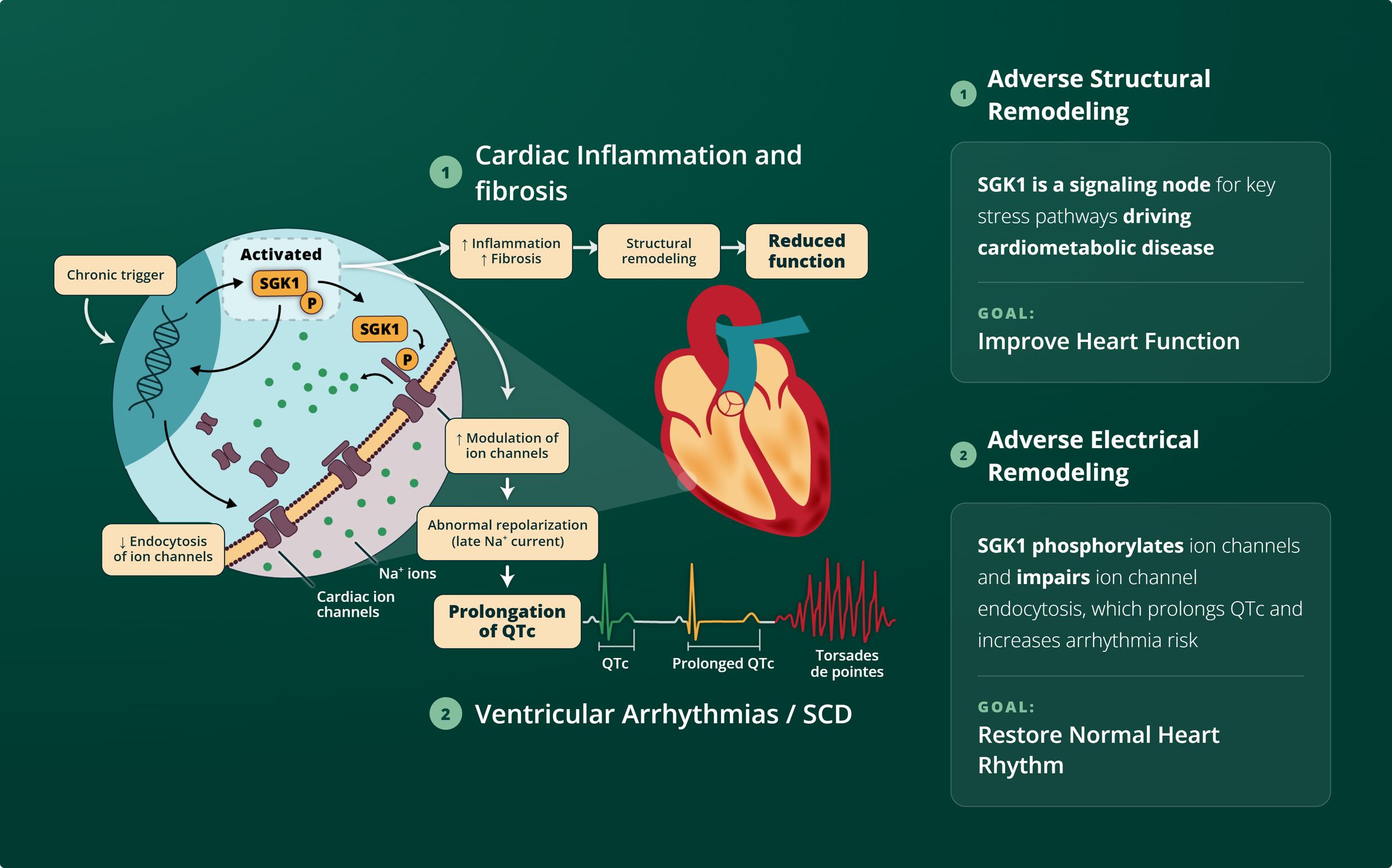
Mechanism of action: chronic stress activates SGK1, driving adverse structural remodeling and adverse electrical remodeling in the heart.
Cardiac focus

Electrical remodeling and instability
SGK1 dysregulates cardiac ion channel regulation and electrical activity. SGK1 activation heightens the risk of serious abnormal heart rhythms.

Cardiac dysfunction and remodeling
SGK1 signals pathways of inflammation, tissue remodeling/fibrosis, and metabolism that adversely affect cardiac structure and function.

Clinical investigation
Thryv’s best-in-class SGK1 inhibitors are in development for high unmet need cardiac and non-cardiac diseases.

Human genetic validation
Lower ventricular SGK1 expression is associated with reduced heart failure risk.
In the UK Biobank, a rare SGK1 variant was significantly associated with heart failure.
These human genetic findings validate SGK1 as a core disease node to target persistent electrical, functional, and structural disease abnormalities in heart failure and cardiomyopathies.
The safety and efficacy of THRV-1268 have not been established. THRV-1268 is investigational; these research programs do not establish a treatment benefit. THRV-1268 has not been approved for commercial use by any regulatory authority (e.g., the FDA in the United States, Health Canada in Canada, or the TGA in Australia).